Vera-Ellen Biography: Age, Height, Husbands, Daughter, Movies, White Christmas, and Net Worth
Vera-Ellen was one of Hollywood’s most dazzling musical stars, a dancer so precise and effortless that she could steal a scene without saying a word. This vera-ellen biography covers the basic facts people look for—age, height, family, and net worth—while also telling the fuller story of how a talented Midwestern kid became a Broadway standout, then a film favorite in classics like On the Town and White Christmas.
Basic Facts About Vera-Ellen
- Full name: Vera-Ellen Rohe
- Born: February 16, 1921
- Birthplace: Norwood, Ohio, USA (near Cincinnati)
- Died: August 30, 1981
- Age at death: 60
- Height: 5 ft 4 in (1.63 m)
- Profession: Dancer, actress, singer (singing often dubbed in films)
- Years active: 1930s–1950s (with occasional TV appearances afterward)
- Known for: On the Town (1949), White Christmas (1954), classic MGM-era musicals
- Spouses: Robert Hightower (divorced), Victor Rothschild (divorced)
- Children: 1 daughter (Victoria Ellen), who died in infancy
- Estimated net worth: Around $3 million (public estimates vary)
Early Life in Ohio: A Girl Who Couldn’t Sit Still
Vera-Ellen’s story begins in Norwood, Ohio, a working, family-centered community just outside Cincinnati. She started dancing young, and by the time she was a teenager, she wasn’t simply “taking lessons.” She was winning attention. One of the most repeated stories from her early years is that she gained recognition through amateur performance competitions, the kind that could open doors for a determined young performer long before the internet made discovery easy.
What made her special wasn’t only talent—it was polish. Even early on, people noticed that she danced with a clean, sharp style that looked professional. Vera-Ellen didn’t move like someone hoping to be good. She moved like someone who already believed she belonged on a bigger stage.
From Training to Broadway: Becoming a Real Working Dancer
Before Hollywood, there was New York. Like many dancers of her era, Vera-Ellen built her career through stage work—hard schedules, constant rehearsal, and the pressure of performing live. She became associated with the kind of high-level dance jobs that separated the best from the rest, including work connected to major venues and productions where discipline mattered as much as charisma.
Broadway was also where she learned something that later helped her on film: how to project energy. Stage dancers have to sell movement to the back row. When those dancers transition to movies, their performance often reads as “bigger” and more memorable on camera. Vera-Ellen brought that stage confidence to Hollywood, which is one reason she never looked timid beside giant stars.
Hollywood Breakthrough: When Musicals Ruled the Box Office
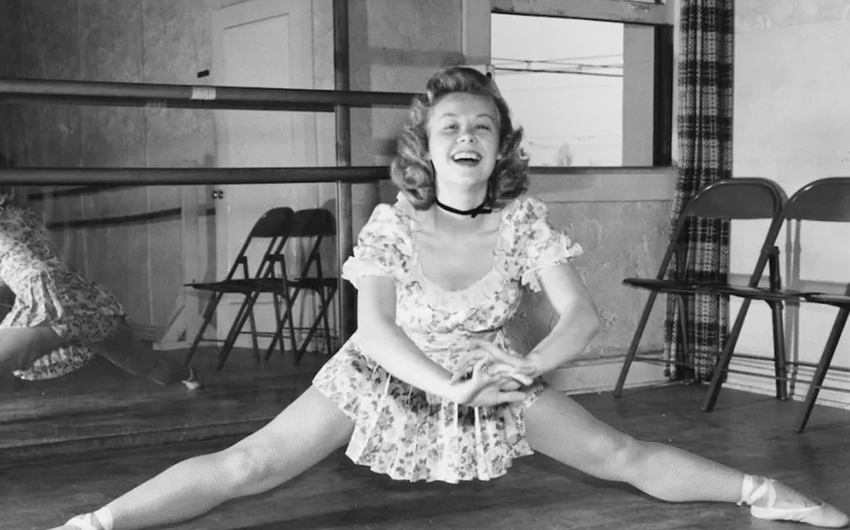
Vera-Ellen arrived in Hollywood at a perfect time. Studios were still investing heavily in musicals, and audiences wanted glamour, romance, and dance numbers that felt like pure escape. She fit the era beautifully. She had the classic look—bright, camera-ready, and elegant—but her real weapon was movement. She danced with a lightness that made difficult choreography look effortless.
Her film career also benefited from something important: she could partner well. Some dancers shine only in solos. Vera-Ellen could dance with leading men and still hold the viewer’s eye, which is why she became a natural match for stars known for dance-driven films.
Signature Films: The Roles People Still Remember
Vera-Ellen appeared in multiple major studio musicals, but a few titles define her legacy more than anything else.
On the Town
In On the Town (1949), she performed alongside Gene Kelly in a film that remains a landmark of movie-musical choreography. The movie’s energy is fast, playful, and athletic—exactly the kind of environment where a dancer like Vera-Ellen could shine. Even decades later, her work in that film is often cited when people talk about the golden age of dance on screen.
White Christmas
White Christmas (1954) is the project that made her a permanent holiday-season fixture. She played Judy Haynes, the sharper, sassier half of the sister act. The film’s songs, costumes, and dance numbers became comfort viewing for generations, and Vera-Ellen’s dancing remains one of the movie’s biggest pleasures.
One detail many viewers don’t realize until later: while Vera-Ellen could sing, her vocals in several film projects were often dubbed, including in White Christmas. That was common practice in the era—studios wanted the “perfect” vocal tone and sometimes used a different singer, even when the on-screen performer was talented. It’s a reminder of how controlled old Hollywood could be: image, sound, and performance were assembled like a carefully built machine.
Other Notable Work
Beyond those two classics, Vera-Ellen’s filmography includes multiple musical and comedy projects where she was used exactly as she should have been used: as a centerpiece dancer who could lift the entire mood of a scene. In an era filled with famous performers, she still stood out because her technique was so clean and her screen presence so warm.
Style and Reputation: Why Her Dancing Looked Different
Vera-Ellen’s dancing had a crispness that made her look almost weightless. She wasn’t only a “pretty mover.” She had control—tight footwork, quick turns, and an ability to hit choreography with accuracy while still making it feel like fun. That combination is rare. Many dancers are precise but stiff. Others are expressive but messy. Vera-Ellen was both: exact and entertaining.
She also had a camera-friendly quality that mattered in film musicals. The camera loves clarity. It loves clean lines, sharp timing, and a performer who can hold a pose for a half-second longer so the audience can enjoy the picture. Vera-Ellen understood that instinctively, which made her a director’s dream.
Personal Life: Husbands, Daughter, and Heartbreak
Vera-Ellen’s private life included both love and tragedy. She married dancer Robert Hightower, and the marriage later ended in divorce. She later married Victor Rothschild, and that marriage also ended in divorce. While married to Rothschild, she had a daughter, Victoria Ellen.
Sadly, her daughter died in infancy, a loss that changed the direction of Vera-Ellen’s life. Many biographies describe her becoming more withdrawn from public life afterward. When a performer is known for light, joyful work, people sometimes forget the human reality behind the curtain. Vera-Ellen’s story includes deep pain, and that pain likely influenced why she stepped away as the years passed.
Rumors, Appearance, and the “Hollywood Pressure” Problem
Vera-Ellen’s extremely slim figure became the subject of rumors during her career, including speculation about an eating disorder. People close to her have disputed that narrative, but the fact the rumor lasted says something about the era: actresses and dancers were judged constantly, and the public felt entitled to explain their bodies as if they were public property.
Another long-running myth involves White Christmas and claims about why her neck appears covered in some scenes. The truth is that studio wardrobe decisions were often made for many reasons—costume design, lighting, character style, and the visual balance of a scene. Old Hollywood created rumors easily because it was secretive, and secrecy invites speculation.
What’s worth focusing on, instead of gossip, is this: Vera-Ellen performed in an industry that demanded perfection, and she delivered it repeatedly. Whether the public understood the pressure or not, she lived inside it.
Later Years: Stepping Away as Musicals Faded
By the late 1950s, Hollywood musicals weren’t being produced at the same volume, and the industry started shifting toward different kinds of films. For a performer so strongly tied to dance-driven roles, that shift mattered. Vera-Ellen appeared less, and eventually she moved away from the spotlight. Some stars reinvent themselves in dramatic roles. Others decide they’d rather live privately than chase a new identity onscreen. Vera-Ellen leaned toward privacy.
That choice adds to her mystique today. Because she wasn’t constantly giving interviews and staying in the public eye, she became a figure people remember mainly through the work. And in a way, that’s fitting. Her art was movement, not talk.
Death: What Happened to Vera-Ellen?
Vera-Ellen died on August 30, 1981, in Los Angeles at age 60. She reportedly died from ovarian cancer. She was buried at Glen Haven Memorial Park in the Los Angeles area. Her death didn’t erase her presence, though. Every holiday season, as White Christmas returns to screens, new viewers discover her and realize just how special her talent was.
Net Worth: How Much Was Vera-Ellen Worth?
Vera-Ellen’s exact net worth was never published in a confirmed, official figure, so any number you see is an estimate based on her career and era. A commonly cited estimate places her net worth at around $3 million at the time of her death, though public estimates vary.
It also helps to keep her time period in mind. Classic Hollywood stars didn’t always earn the kind of money modern celebrities do, and studio contracts could limit long-term profit. Still, Vera-Ellen’s work in major studio films, Broadway roles, and lasting cultural visibility likely created steady earnings and royalties over time.
Legacy: A Dancer Who Still Looks Modern
Vera-Ellen’s legacy isn’t just that she was “good for her time.” She’s good now. Her dancing still looks sharp, musical, and alive, even beside modern choreography. She represents something rare in entertainment: a performer whose work stays enjoyable even after styles change.
Today, she’s remembered as one of the most elegant dancers Hollywood ever filmed—an artist who made hard movement look easy and made joy look natural. If you want to understand why classic movie musicals still matter, you watch Vera-Ellen. She’s part of the reason they still sparkle.
image source: https://www.womansworld.com/entertainment/celebrities/vera-ellen