Maya Moore Biography: Age, Height, Husband, Child, WNBA Legacy, Net Worth Today
Maya Moore didn’t just win everywhere she went—she made winning look like a habit. This Maya Moore biography covers the basics fans always want first (age, height, family, and net worth) and then dives into why she’s considered one of the most accomplished players in women’s basketball history. Her story is also bigger than sports, because she stepped away in her prime to focus on social justice work that changed a real life.
Basic Facts About Maya Moore
- Full name: Maya April Moore (commonly known as Maya Moore)
- Born: June 11, 1989
- Birthplace: Jefferson City, Missouri, USA
- Age: 36 (as of January 2026)
- Height: 6 ft 0 in (1.83 m)
- Position: Forward
- College: University of Connecticut (UConn)
- WNBA team: Minnesota Lynx (entire WNBA career)
- Marital status: Married
- Husband: Jonathan Irons
- Children: 1 son (Jonathan Hughston Irons Jr.)
- Estimated net worth: About $5 million (public estimate; varies by source)
Early Life: A Missouri Kid With a Big-Game Engine
Maya Moore was born in Jefferson City, Missouri, and her earliest years weren’t wrapped in celebrity or sports hype. She was simply a kid who loved to play and had a competitive spark that kept growing. One of the most memorable details from her upbringing is how early basketball entered her daily life—when a child wants the hoop close enough to feel like part of the house, you’re usually looking at someone who’s not just “trying it out.”
Her family life shaped her, too. Moore has spoken publicly over the years about her close bond with her mother, Kathryn, and how her support system helped her stay grounded as her talent became obvious to everyone else. That grounding would matter later, because Moore’s career wasn’t only about collecting trophies. It was also about choosing what kind of person she wanted to be while collecting them.
High School Stardom: Winning Became the Standard
By the time Moore reached high school, she wasn’t viewed as a “good player.” She was viewed as the player everyone circled on the calendar. She starred at Collins Hill High School in Georgia and built a reputation as a do-everything force—someone who could score, defend, rebound, and change a game’s mood with one run.
High school greatness can sometimes be misleading; plenty of stars fade when the competition rises. Moore did the opposite. The higher the level got, the more comfortable she looked. That’s usually the clearest sign of a true elite athlete: the moment doesn’t speed them up, it slows down for them.
UConn Years: A College Dynasty Powered by Her Consistency
Maya Moore’s time at the University of Connecticut is one of the most celebrated stretches in women’s college basketball. UConn was already a powerhouse, but Moore’s era felt especially complete: dominant defense, disciplined offense, and an expectation that the team would win every night, not “most nights.”
What made Moore stand out at UConn wasn’t just her talent—many great players have talent. It was her balance. She could take over scoring when needed, but she could also play within the system and still feel like the best player on the floor. That is harder than it sounds. Some stars need the game to revolve around them. Moore could shine even when the game was shared.
She also built a reputation for showing up in the biggest games. Tournament pressure breaks a lot of players because every possession feels heavier. Moore treated pressure like a familiar language. Her college run helped cement her as a future top pick, but it also built something else: trust. Coaches trusted her. Teammates trusted her. Fans trusted that she wouldn’t disappear when it mattered.
WNBA Draft and Minnesota Lynx: The Start of a Championship Era
Maya Moore entered the WNBA with the kind of expectations that can crush a player before they even find their routine. She was selected first overall in the 2011 WNBA Draft by the Minnesota Lynx, and she landed in an environment that was ready to win now.
The fit was perfect. Moore brought the scoring punch, defensive intensity, and versatility that turns a great team into a title team. With the Lynx, she wasn’t asked to be a one-woman show. She was asked to be the final piece in a championship machine—and she played the role like she’d been built for it.
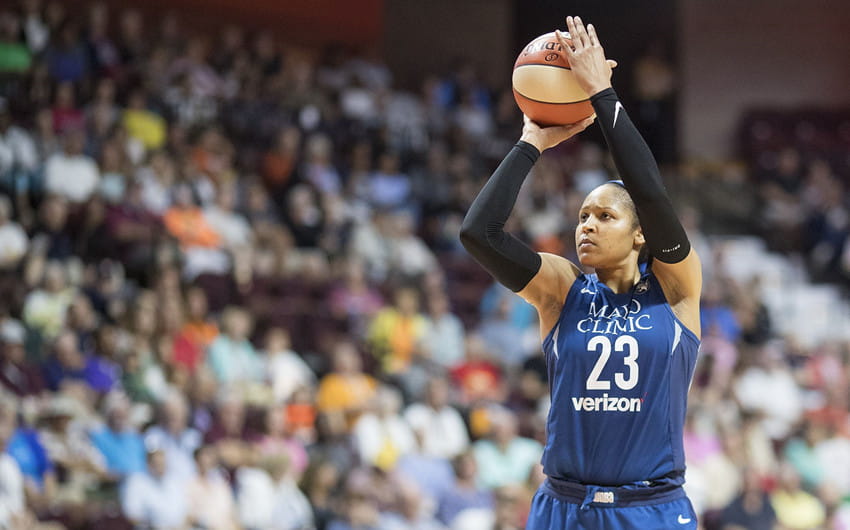
The results were historic. Moore helped the Lynx win four WNBA championships (2011, 2013, 2015, and 2017). In a league where dynasties are hard to maintain, that run is a serious statement. It wasn’t “one lucky season.” It was sustained dominance.
Individual Awards: MVP-Level Greatness
Team championships are the loudest proof of success, but Moore also piled up individual recognition. She won WNBA Rookie of the Year in 2011, which immediately confirmed she was not going to need years to adjust. She also earned WNBA MVP in 2014, a season that captured her peak blend of scoring efficiency, two-way impact, and leadership.
She added another signature achievement by winning WNBA Finals MVP in 2013. Finals MVP matters because it’s not a “full season” award—you get it for delivering in the tightest moments, when the opponent knows your tendencies, the scouting is detailed, and the pressure is at its highest. Moore didn’t just perform under those lights. She owned them.
Team USA: Olympic Gold and Global Dominance
Maya Moore’s résumé also includes major international success with Team USA. She was part of Olympic gold medal teams in 2012 and 2016, adding global confirmation to what WNBA fans already knew. The Olympics are a different kind of challenge—different teammates, different chemistry, shorter time to gel—and Moore still looked like someone who belonged at the top.
When a player wins at high school, college, the pros, and the Olympics, it becomes hard to argue against them as an all-time great. That’s why Moore’s name carries weight even among people who don’t watch every WNBA season. The achievements are too consistent to dismiss.
Playing Style: Why She Was So Hard to Guard
Maya Moore’s game was built on versatility. She wasn’t just a shooter. She wasn’t just a slasher. She was the kind of forward who could hurt you in multiple ways, and that’s what makes a player feel “unstoppable.”
- Three-level scoring: She could hit outside shots, create mid-range looks, and finish at the rim.
- Strong footwork: Her pivots and balance helped her score without needing reckless speed.
- Two-way effort: She didn’t treat defense like a chore; she treated it like part of winning.
- Big-moment calm: When games tightened up, she rarely looked rushed.
- Adaptability: She could play within a system or take over when a team needed a closer.
Her best quality might have been how complete she felt. Coaches love players who don’t force you to protect them. Moore wasn’t someone you had to hide on defense or avoid in certain matchups. She gave you answers, not problems.
Stepping Away in Her Prime: A Decision That Shocked Sports
In 2019, Maya Moore stepped away from professional basketball. For many fans, it felt almost unreal because she still had years of elite play left. Athletes usually leave when the body says it’s time or when the league moves on. Moore left while she still looked like she could be the best player in the world on any given night.
Her reason wasn’t mysterious, though. She chose to focus on her faith, her personal priorities, and criminal justice advocacy—especially a case that would become central to her life: Jonathan Irons, a man she believed had been wrongly convicted and imprisoned.
In sports culture, where the expectation is “keep playing until the wheels fall off,” her decision stood out as unusually brave. It took courage to walk away from fame and routine, especially when the world kept telling her she was supposed to keep collecting trophies.
Jonathan Irons, Marriage, and Motherhood
Maya Moore’s advocacy for Jonathan Irons became one of the most talked-about athlete activism stories of the decade. She didn’t treat it like a quick social media campaign. She invested real time, real resources, and real emotional energy into the effort. Irons was released in 2020 after his conviction was overturned, and soon after, Moore and Irons married.
In 2022, they welcomed a son, Jonathan Hughston Irons Jr. Becoming a mother added a new layer to Moore’s already full story. Many fans see her life now as proof that “legacy” doesn’t have to be only about what you do in your profession. Legacy can also be about the life you build and the lives you help reshape.
Win With Justice and Life After Basketball
Moore didn’t step away from basketball just to rest. She stepped away to work. Her activism expanded into broader efforts aimed at reform, accountability, and fairness in the justice system. She has been connected to the Win With Justice initiative, which reflects her long-term commitment to pushing for change rather than treating advocacy as a temporary side project.
This chapter is one reason her name carries respect across different communities. Even people who don’t follow women’s basketball have heard of the athlete who walked away from the spotlight to fight for someone’s freedom—and then kept going after the headline moment passed.
Net Worth: How Much Is Maya Moore Worth?
Maya Moore’s net worth is not publicly confirmed through any single official document, so the figures online are estimates. A widely repeated estimate places her around $5 million, with some sources listing slightly lower or higher. The variation is normal because endorsements, investments, and private financial decisions aren’t fully public.
Her wealth is generally tied to several streams:
- WNBA salary and bonuses: A long career with a top franchise and championship seasons.
- Endorsements and sponsorships: Brand partnerships during her peak visibility years.
- Appearances and licensing: Long-term value tied to an iconic career and highlights that keep circulating.
- Post-career work: Public speaking, advocacy-related projects, and professional opportunities tied to her legacy.
Even if the exact number shifts depending on the source, the bigger point remains: Moore built financial stability while also choosing a life path that wasn’t purely driven by money.
Legacy: More Than an All-Time Great
It’s easy to describe Maya Moore as a champion, MVP, and Olympic gold medalist—and she is all of those things. But her legacy feels bigger because she challenged the usual athlete storyline. She proved she could be the best, then proved she didn’t need to keep playing to prove it.
On the court, she’s remembered as a complete player who helped define a dynasty. Off the court, she’s remembered as someone who used her prime years to fight for justice in a very real, personal way. That combination is rare. Plenty of athletes win titles. Far fewer leave the game in their prime and still expand their impact.
Years from now, when people list the greatest winners in women’s basketball, Maya Moore will be near the top. And when people talk about athletes who changed lives beyond sports, she’ll be there too.
image source: https://edition.cnn.com/2023/01/16/sport/maya-moore-wnba-retirement-spt-intl